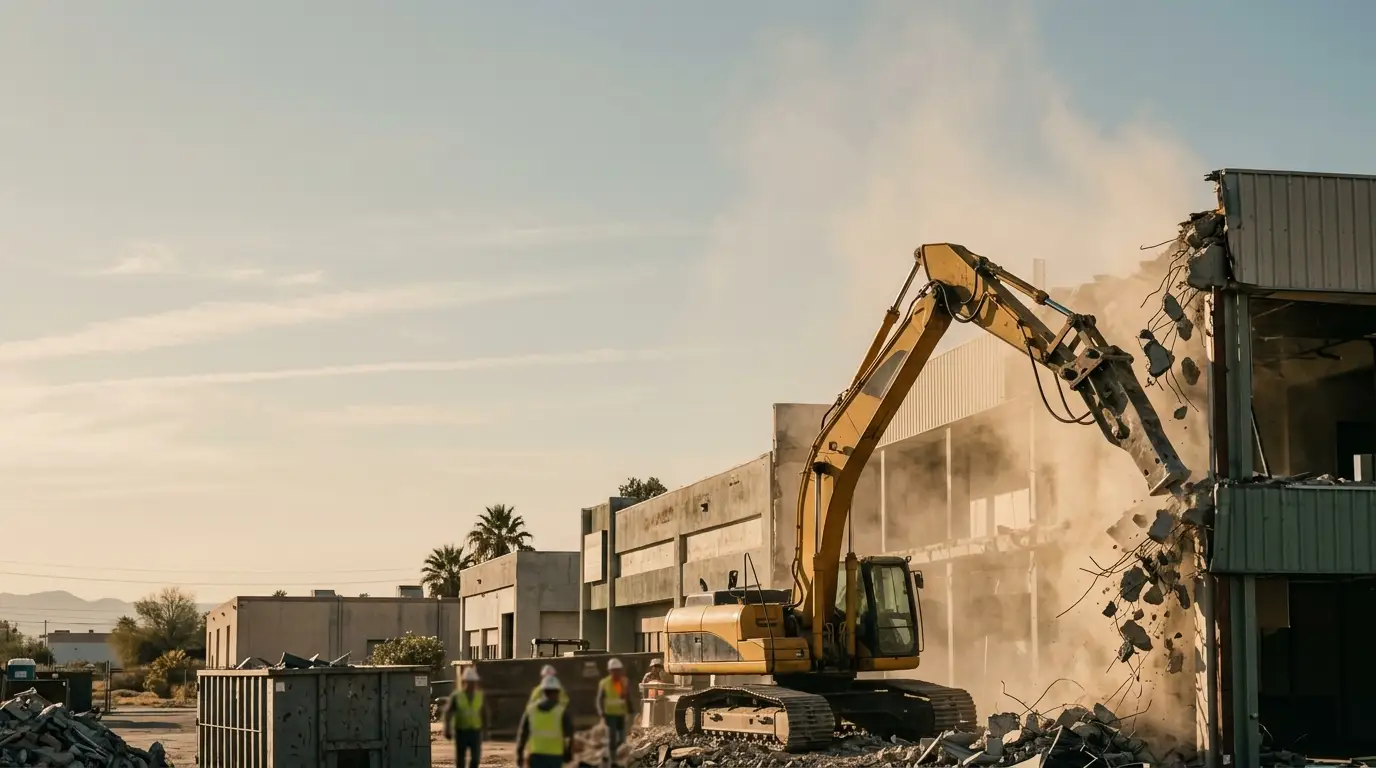
Property type varies more across this coverage area than the rulebook does. Salinas has decades of Alisal-area housing stock, a downtown commercial core, and light-industrial buildings; the valley towns south of it are built around agriculture. What doesn’t change: a certified survey before anything comes down, an MBARD notification filed at least 10 working days out, and a C-21 licensed crew doing the physical work — house, storefront, or packing shed.
Salinas
The district’s core city, and where most of our jobs originate. Older Alisal-area homes and outbuildings account for a steady share of the residential teardown work, much of it built in an era when asbestos-containing materials were standard in siding, flooring, and roofing — which is exactly why the survey isn’t optional here regardless of a structure’s condition. Downtown, commercial and light-industrial demolition ahead of redevelopment brings its own dust-control planning, particularly on parcels close to occupied storefronts or sidewalks.
Marina
Newer construction on former Fort Ord land sits alongside an older residential core, so project age varies more here than in most of the coverage area. Clearing remaining structures ahead of new development is common, alongside standard residential demolition — the survey applies to both regardless of when the structure went up.
Seaside
Seaside’s housing stock leans mid-century, on lots that tend to be tighter than Salinas’s. Equipment access and staging space are bigger factors in how a Seaside job gets planned than in more open parts of the valley.
Castroville
Agricultural infrastructure — packing sheds, cold-storage buildings, processing structures — sits next to an older residential core here, and cement-asbestos siding and roofing from that era shows up often enough that we plan for it as a default, not a surprise.
Gonzales
A smaller valley community where the work splits fairly evenly between ag-building removal and residential teardowns, with a mix of older and newer housing stock.
Soledad
Further down the valley, away from the coast; the demolition mix here skews toward agricultural and residential structures, and the same MBARD timeline applies whether the property sits five miles from Salinas or forty.
Watsonville
Just over the county line into Santa Cruz County — but still MBARD’s jurisdiction, so nothing about the sequence changes. A long agricultural history means packing houses and processing buildings show up regularly, alongside an older downtown residential core.
Wherever the Property Sits
The permit desk changes by city; the survey-and-notification requirement doesn’t. If you’re inside the MBARD district and not sure whether your project needs a survey before demolition, that’s worth a short call before it’s worth a bid — pricing specifics live on the cost guide, and the survey requirement itself is covered in full on the pre-demolition survey page.